IFAAMAS grew out of three separate research communities that spent the 1990s deciding to meet in one place. What follows is the short version of how the Foundation, its conference and its awards came to be.
The field agrees to meet in one place
At a meeting during IJCAI-93, the leaders of the European MAAMAW workshops, the Asian multi-agent workshops and the North American Distributed AI workshops — three communities of a few dozen researchers each — begin planning a single combined conference.

The first ATAL workshop
The Workshop on Agent Theories, Architectures and Languages runs alongside ECAI-94 with 32 submissions and 55 participants, making it the largest workshop at the conference. ATAL becomes an annual fixture and one of the three meetings that will later merge.

The first ICMAS
The plan made at IJCAI-93 becomes the First International Conference on Multi-Agent Systems, chaired by Victor Lesser. More than 500 researchers attend — ten times the size of the workshops it replaced.

The first AGENTS conference
The First International Conference on Autonomous Agents, sponsored by ACM SIGAI, SIGGRAPH and SIGCHI, completes the trio. Agent research now has three annual venues and a growing overlap between them.

IFAAMAS is founded
The International Foundation for Autonomous Agents and Multiagent Systems is established with Victor Lesser as its founding president. It is a non-profit organisation, incorporated in South Carolina, USA, whose purpose is to promote science and technology in artificial intelligence, autonomous agents and multiagent systems.
The same year, the journal Autonomous Agents and Multi-Agent Systems (JAAMAS) publishes its first issue. It remains the Foundation’s official journal.

The first research award
The ACM/SIGAI Autonomous Agents Research Award is presented for the first time, to Tuomas Sandholm. It has been awarded every year since and is the Foundation’s oldest honour.
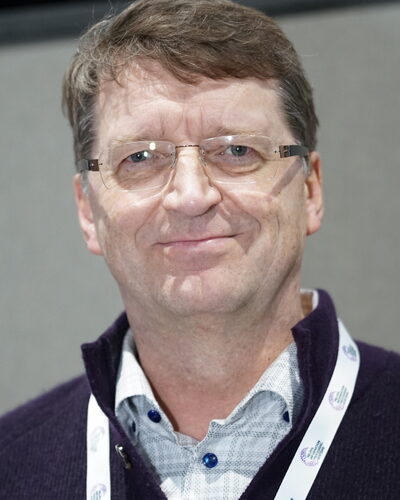
The first AAMAS
AGENTS, ICMAS and ATAL merge into one event: the First International Joint Conference on Autonomous Agents and Multiagent Systems. The goal is a single, high-profile forum for research in the theory and practice of the field. AAMAS has been held every year since and is the Foundation’s flagship conference.

Two more awards
IFAAMAS establishes the Influential Paper Award, which recognises work whose impact is only fully visible years after publication, and a distinguished dissertation award, first won by Vincent Conitzer. The dissertation award is later named after Victor Lesser, in recognition of the many outstanding doctoral students he graduated in the field.

AAMAS moves online
Seven weeks before it was due to open in Auckland, the conference is rebuilt as the first fully virtual AAMAS. More than 3,700 people take part, several times the attendance expected in person. The 2021 edition, hosted by London, is held online as well.

Twenty-five editions of AAMAS
AAMAS 2026 marks the silver jubilee of the conference series, a quarter of a century after Bologna, and the twenty-eighth year of the Foundation.
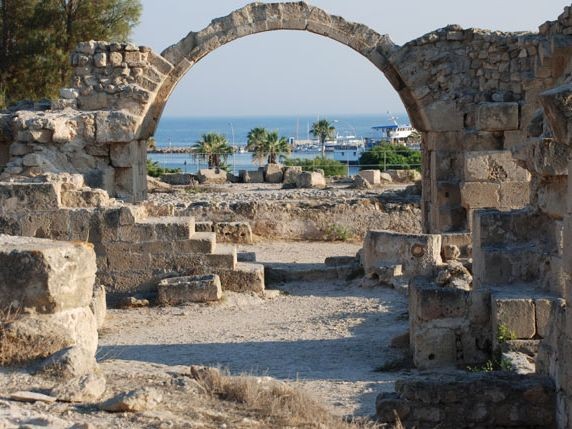
AAMAS 2027
The 26th edition takes the conference to Hanoi, and to Vietnam for the first time.

Every conference in the series is listed on Previous Editions, and the full roll of recipients for each of the three honours is under Awards.

.JPG)


.jpg)